
Commercial Epoxy Flooring
in Batesville, AR
A coating system chosen for the reality of your business floor: how much traffic it carries, what gets spilled or dragged over it and the conditions it works under.
Your Floors Should Work as Hard as Your Business Does
A working floor takes repetitive wear that ordinary concrete rarely faces. Front entrances, checkout lanes and primary aisles see an unbroken parade of shoes and carts whenever the doors are open. Equipment follows identical routes again and again, grinding away at the same strips. Bare concrete under that pounding soaks up anything that reaches it, and the floor gradually breaks down.
Shoppers judge a business before they ever reach the register. Scuffed lanes, stains near the checkout and spalling at the entrance make a statement about the place, even if nobody is deliberately looking at the floor. The statement gets made whether you want it made or not.
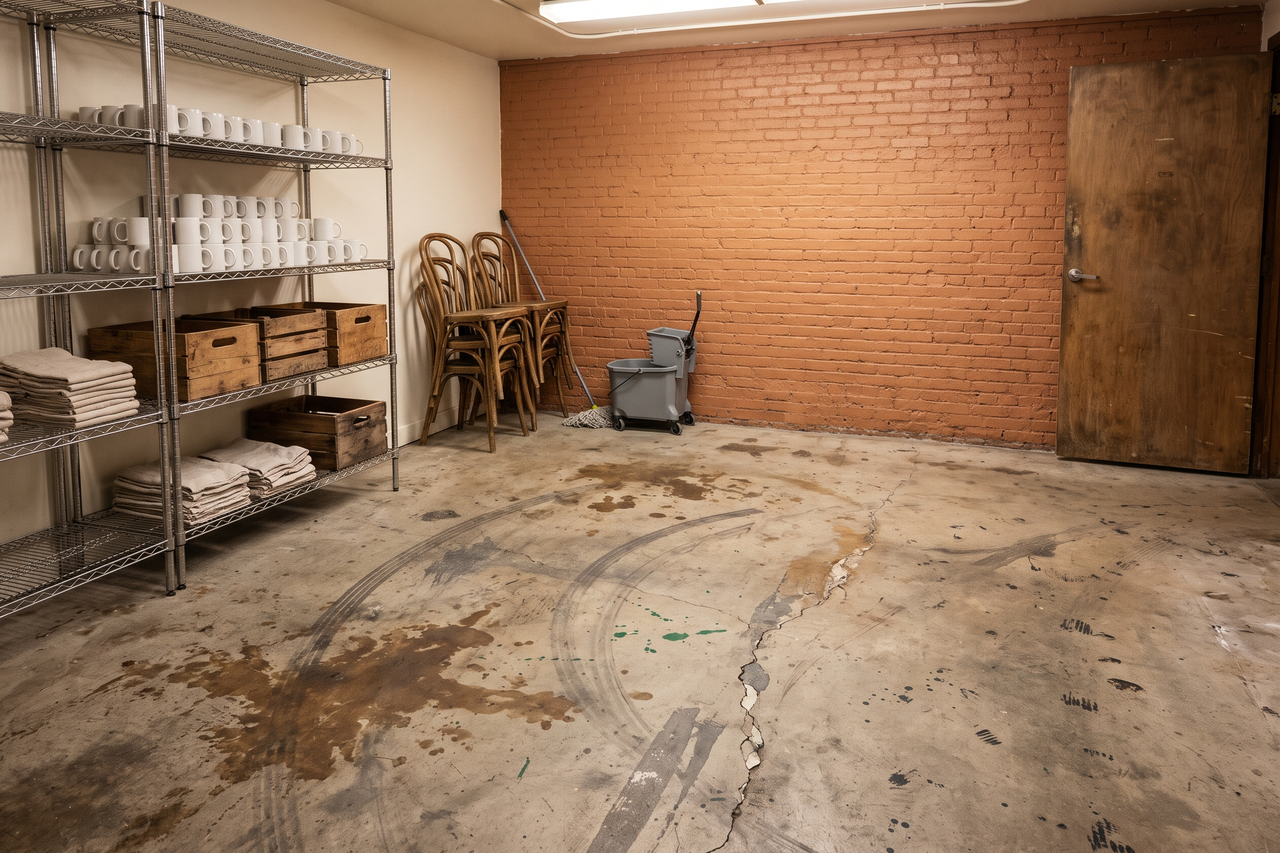
Aging, unsealed concrete in a busy business also resists cleaning more and more. Hairline cracks and rough areas worn in by constant use hold onto grit a mop cannot fully lift. Staff scrub harder and the floor shows less for it.
The Right Floor Starts With Understanding Your Space
No two business floors face the same demands. An oil-change bay, a dental office hallway, a boutique and a café kitchen each contend with a distinct blend of foot traffic, harsh cleaners, spills and wash routines, and each leans on the floor’s looks to its own degree.
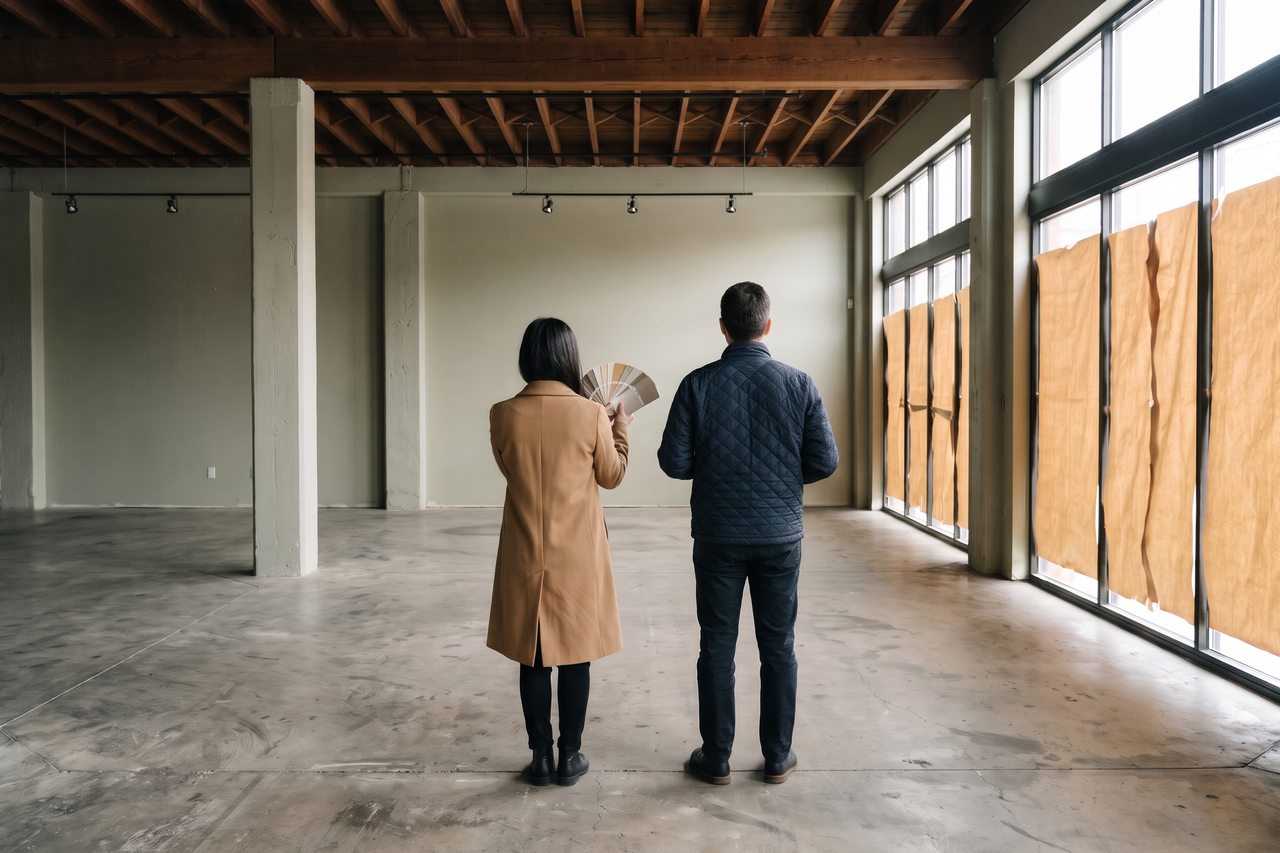
First, the flooring professional studies the floor’s daily life: the traffic and weight moving over it, the cleaners and chemicals it encounters, how strongly its appearance sways customers and whether access to the area needs planning. The coating recommendation grows from that assessment rather than from a stock answer.
Commercial coating options stretch across many settings. Solid color is a practical choice for storage rooms and service areas. Flake systems lend texture and visual interest. Metallic finishes work well on sales floors and in client-facing spaces where the floor sets the mood.
A Commercial Flooring Project Without the Guesswork
A commercial coating job runs along a clear course from first conversation through final coat. Here is how it typically unfolds.
01
Tell Us About Your Property
Tell us the type of business, a normal day’s use of the floor, the present state of the concrete and any access concerns your installer ought to plan for.
02
Get a Flooring Plan
During a walk-through, the flooring professional checks the concrete, watches the space at work and sketches out prep and coating steps fitted to that floor and its everyday use.
03
Transform Your Space
Prep and coating proceed in an order your installer goes over with you first. Any scheduling or phasing is conditional, hinging on the job itself and the contractor, and factoring in the square footage, the chosen system and what inspection reveals.
Planning a Commercial Flooring Project?
Tell us about the space and the punishment the floor takes, and request a commercial flooring estimate. Measurements or snapshots of the existing floor are helpful extras if you have them.
The Wrong Floor Can Become an Expensive Problem
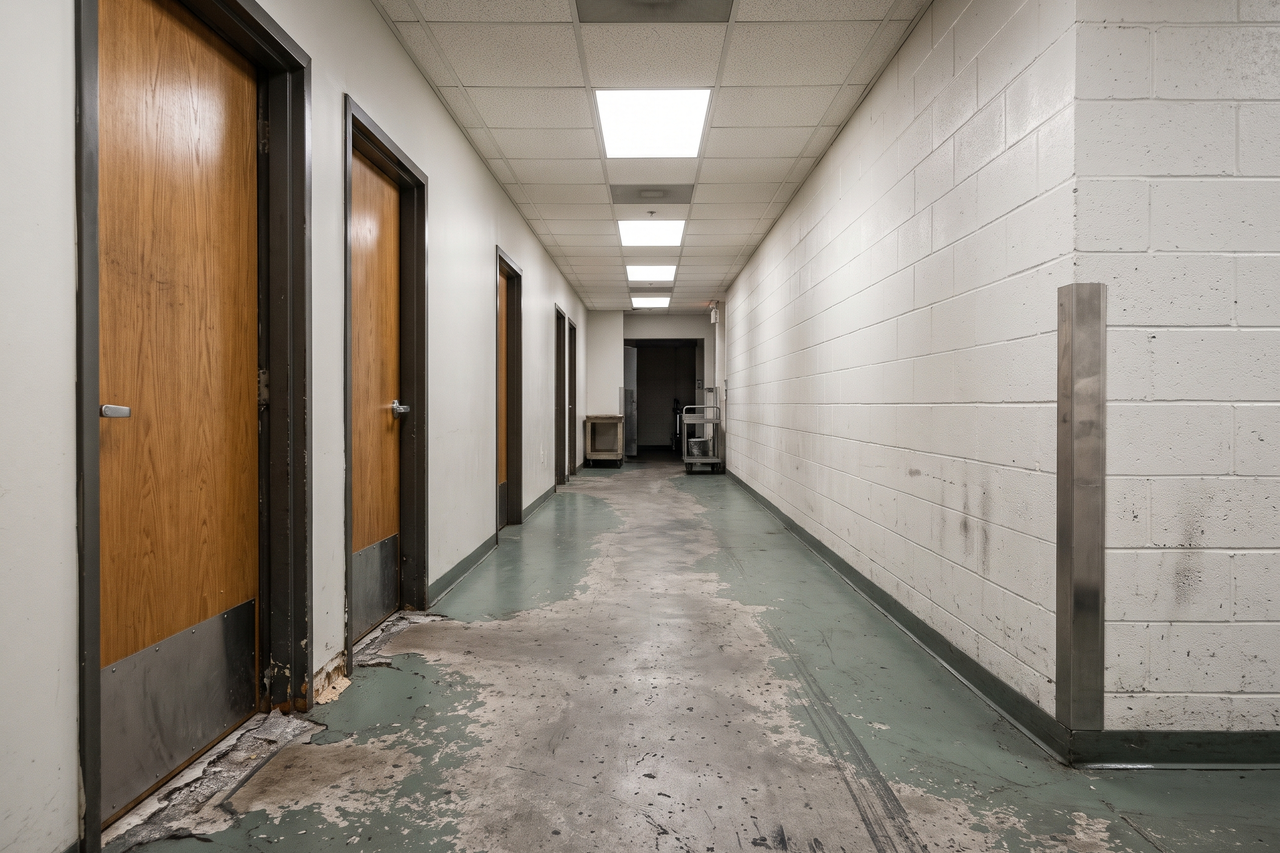
Picture a high-traffic hallway or prep area where the coating is starting to peel at the seams. What begins as a cosmetic flaw soon grows. Lifted edges become a tripping hazard, and dirt wedges into gaps that no mop can get under.
Fixing that failure inside an open business costs more than labor and product. The area has to be closed, shelving or equipment moved out, the old coating removed, the bare slab checked and readied, and fresh coating applied, all at a moment nobody budgeted for.
Choosing a coating that fits the way the space truly functions, and investing real effort in concrete prep beforehand, is the most reliable way to keep that scenario off your calendar.

A Floor That Makes Your Space Work Better
Once the coating fits the conditions the floor truly faces, routine maintenance becomes much easier. Spills stay up on the sealed coat, where a quick wipe catches them before soaking in, with no specialty cleaners required. A broom and mop handle the bulk of the upkeep. A sealed floor also tolerates frequent washing far better than bare concrete on an identical regimen.
A coated floor bounces overhead light around more than raw slab, potentially brightening aisles and work areas without swapping out fixtures. Aisle striping, colored zones and directional markings may be added, based on what the system can do and how your installer suggests laying them out.
A coating picked for its setting shifts the floor from a recurring maintenance chore to something that actually helps the business run.
What Does Commercial Epoxy Flooring Cost?
Cost comes down to the particulars of each job: square footage, how the concrete is holding up, prep and crack repair needs, the right system for the environment and the finish you favor. Calls for higher chemical resistance, extra traction or specialty looks raise the prep and material requirements alike.
Whether the work can be planned around operations or split into phases depends on the job itself and the contractor involved. Flag it early, before the estimate is finalized.
Common Commercial Flooring Questions
Will the business have to close during the floor coating?
That varies with the building and the extent of the work. Sometimes a single zone can be coated while business carries on elsewhere; other layouts require the whole floor to be emptied. Scheduling and phasing are conditional and depend on the specific project and the contractor. Your installer can describe what is realistic once the space has been reviewed.
How hard is it to maintain a coated commercial floor?
Far easier than bare concrete. Spills rest on the coating, and ordinary cleaners lift them before they soak in. A broom and mop cover most maintenance, and a sealed surface handles repeated scrubbing far better than unprotected concrete facing the same routine.
Is epoxy tough enough for heavy carts and equipment?
It depends on the product and the demands your equipment puts on the floor. Certain coatings aren’t made to take loaded carts, ride-on scrubbers or a punishing blend of traffic without letup. While on site, the flooring professional reviews the equipment, its loads and how often it rolls across the slab before recommending a system.
What guides the coating choice on a commercial floor?
It starts with how the floor is actually used. The review weighs traffic and weight, which cleaners and chemicals hit the surface on a regular basis, the level of polish the floor must show and any access concerns for the project. Those details drive the recommendation.