
Industrial Epoxy Flooring
in Batesville, AR
Plant and warehouse concrete earns its keep under steady strain. The right coating is picked for that strain specifically: rolling and resting loads, fluids that splash down, and the scrubbing and chemicals that come with ordinary operation.
Your Floor Takes the Abuse. Your Operation Shouldn't
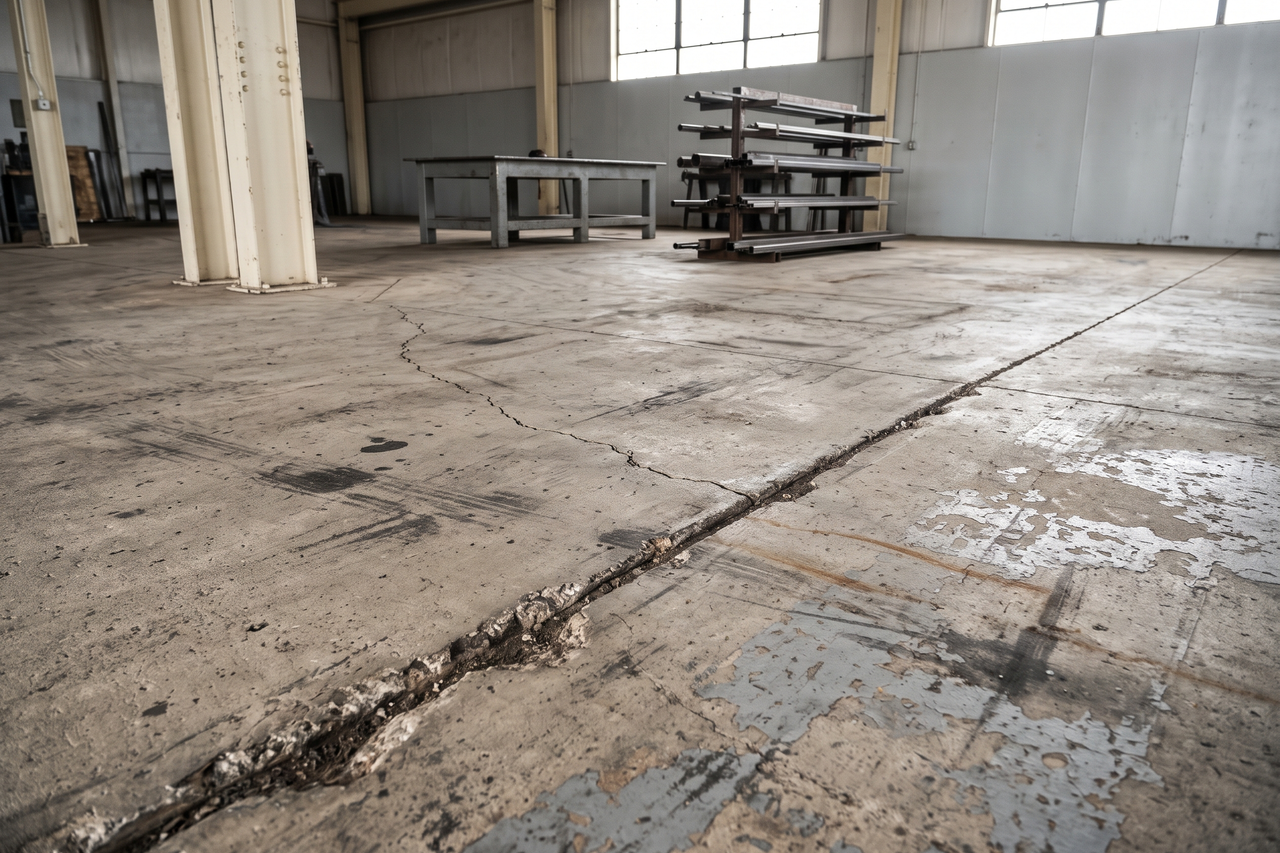
Think of the slab beneath a production line as the hardest-working surface in the building. Lift trucks and pallet jacks trace identical routes shift after shift, chewing on the same few strips of concrete. Machine bases and loaded racks bear down on their footprints without letup. Let a hydraulic hose weep or a coolant line drip, and unsealed concrete drinks it in.
On opening day, bare concrete in a fresh building often looks passable. That impression fades. Wheels and machinery sand away the top layer, and the grit it releases settles on stock, racking and motors alike. Heavy pads and the busiest lanes give out before anything else, and the damage creeps outward from them. In spots where spills are routine, stains sink in past what a scrubber can lift.
Eventually the concrete starts dictating the workday. Operators ease off for rough patches and low spots that were never on any drawing. The cleanup routine eats more labor and delivers less, since the surface keeps crumbling. Employees, visitors and auditors all take in the floor and draw conclusions about the whole operation.
Your Facility Determines the Right Flooring System
Two products sold as industrial coatings can have little in common. Film build, rated load, scuff and chemical performance, even the texture underfoot, shift considerably from system to system. What thrives in one building may disappoint in the next, which is why the slab’s appearance on a walk-through is only a small part of the decision.
So the review goes beyond the concrete itself. The flooring professional looks at the forklifts, carts and machinery in play; which chemicals land on the slab and how concentrated they are; the method and frequency of cleaning; whether the space runs hot, cold or swings between them; and whether striped aisles, marked safety areas or textured grip belong in the build.
Consider a wet washdown bay beside a dusty dry-goods warehouse: the concrete under each faces a different life. Vapor pushing up from the slab, temperature swings, radiant heat near equipment and the specific chemistry on site together set the bar a coating must clear. Pairing a product to a floor reliably takes an on-site study of those conditions first.
Built Around Your Facility. Not the Other Way Around
Before any product gets named or any work gets planned, a good industrial spec starts by learning how this particular facility truly runs.
01
Evaluate the Facility
Someone walks the slab to record its present state, locate the zones where machines and vehicles concentrate their weight, log existing wear and damage, and size up the concrete prep the job will take.
02
Build the Right Flooring Plan
Armed with those findings, your installer proposes a coating build scaled to the real workload, lays out prep and concrete repairs, and talks over each piece of the plan with you before a single machine starts.
03
Put Your Floor to Work
Application proceeds in a sequence the facility signs off on in advance. Staging, scheduling and the work itself depend on the project and the contractor.
Need a Floor Built for a Tougher Environment?
Request an industrial flooring estimate by spelling out what the floor endures on an ordinary shift and which headaches the project ought to fix. Quick snapshots of cracking, staining or worn-through sections fill in useful detail.
Floor Failure Creates Problems Beyond the Floor
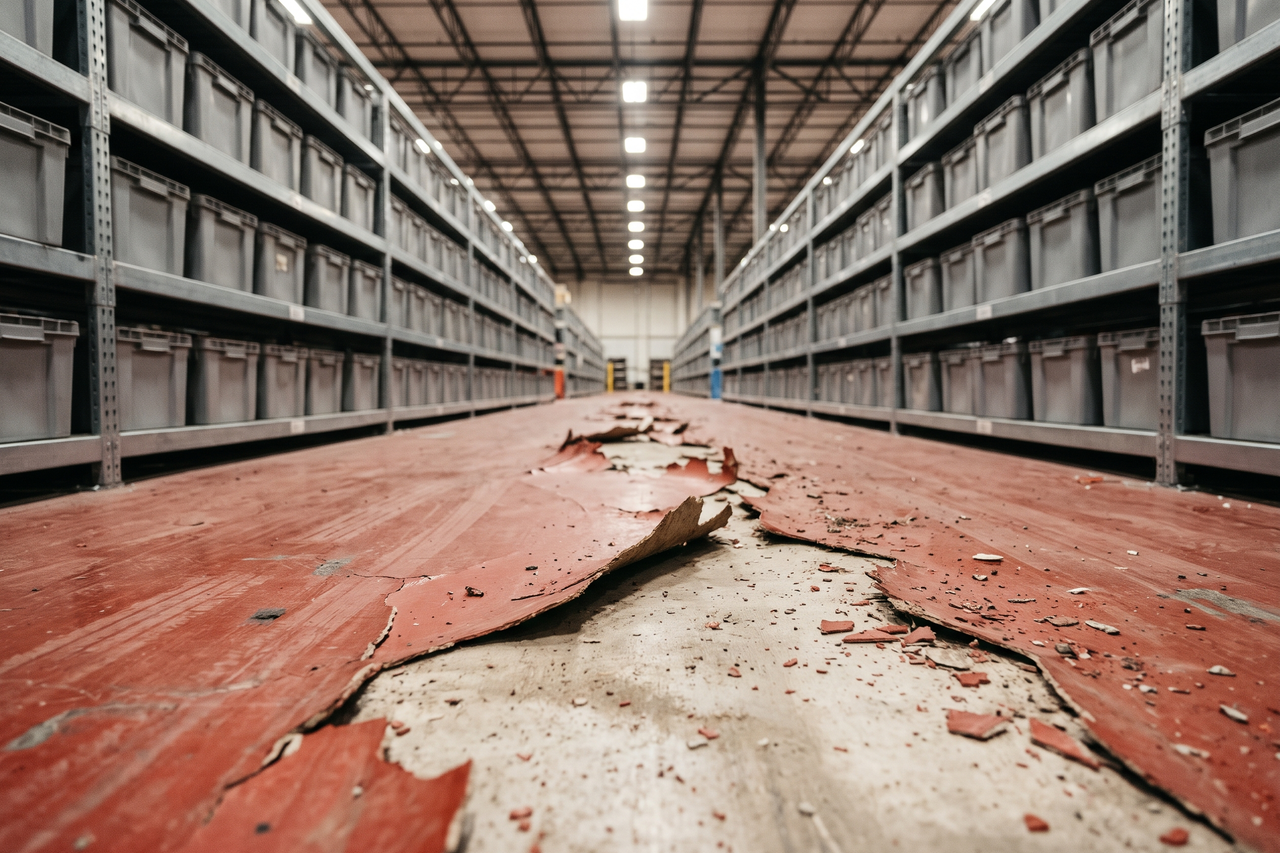
Industrial coatings seldom fail politely. Once a section lets go, flakes ride on tires into the aisles and pile up against machine bases, and a floor problem becomes a throughput problem. Lanes people once crossed without a thought turn into detours the whole operation has to plan around.
Bare concrete uncovered by a failed coating is far tougher to bring back than a slab that started out reasonably healthy. Constant use grinds oils and grime deep into the open surface, and every new bare patch makes containment harder.
Recovering is usually a bigger undertaking than owners anticipate. The zone gets emptied and shut down, the old film is ground away until raw concrete shows, and the slab gets reconditioned to give a properly specified system an honest shot at bonding. Doing all of that a second time commonly outruns the price of planning the first installation carefully.
A Floor That Keeps Up With Your Operation
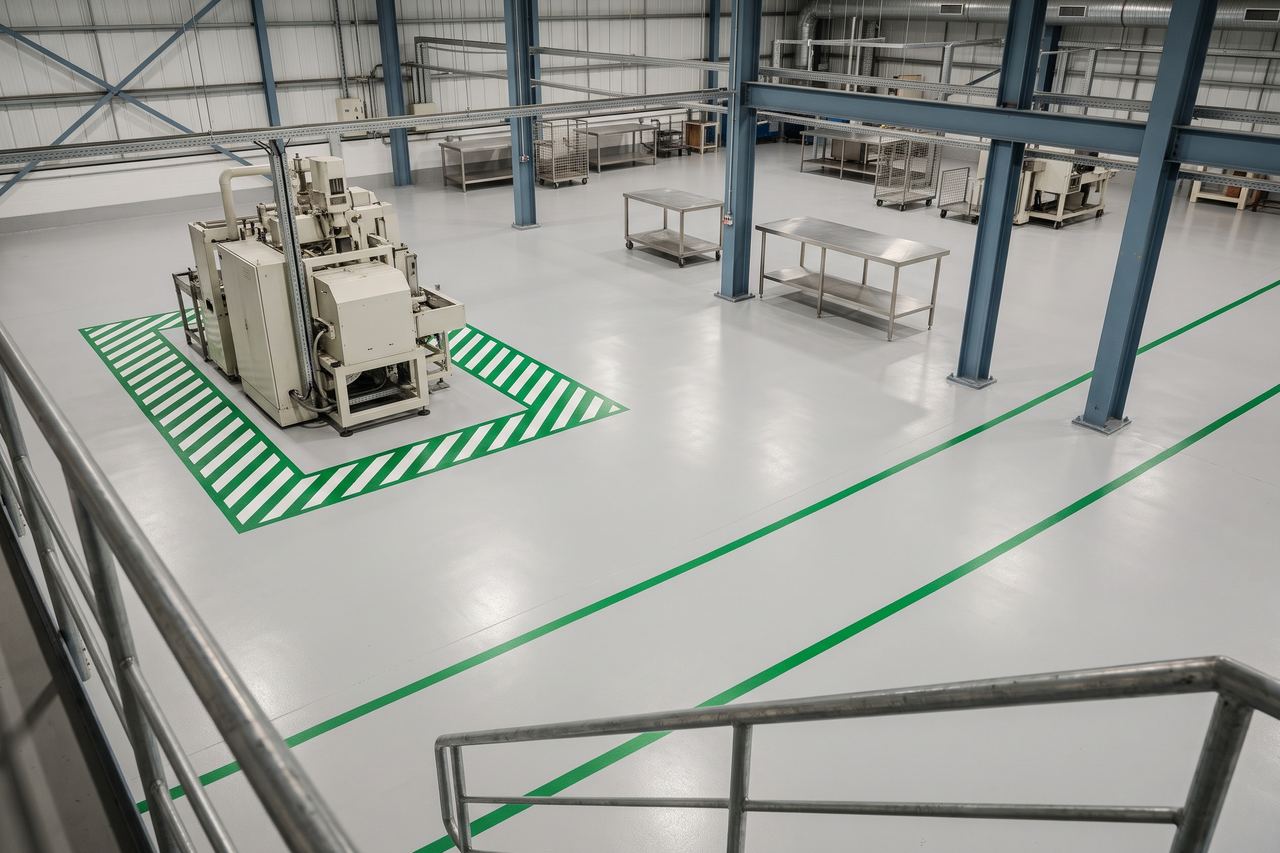
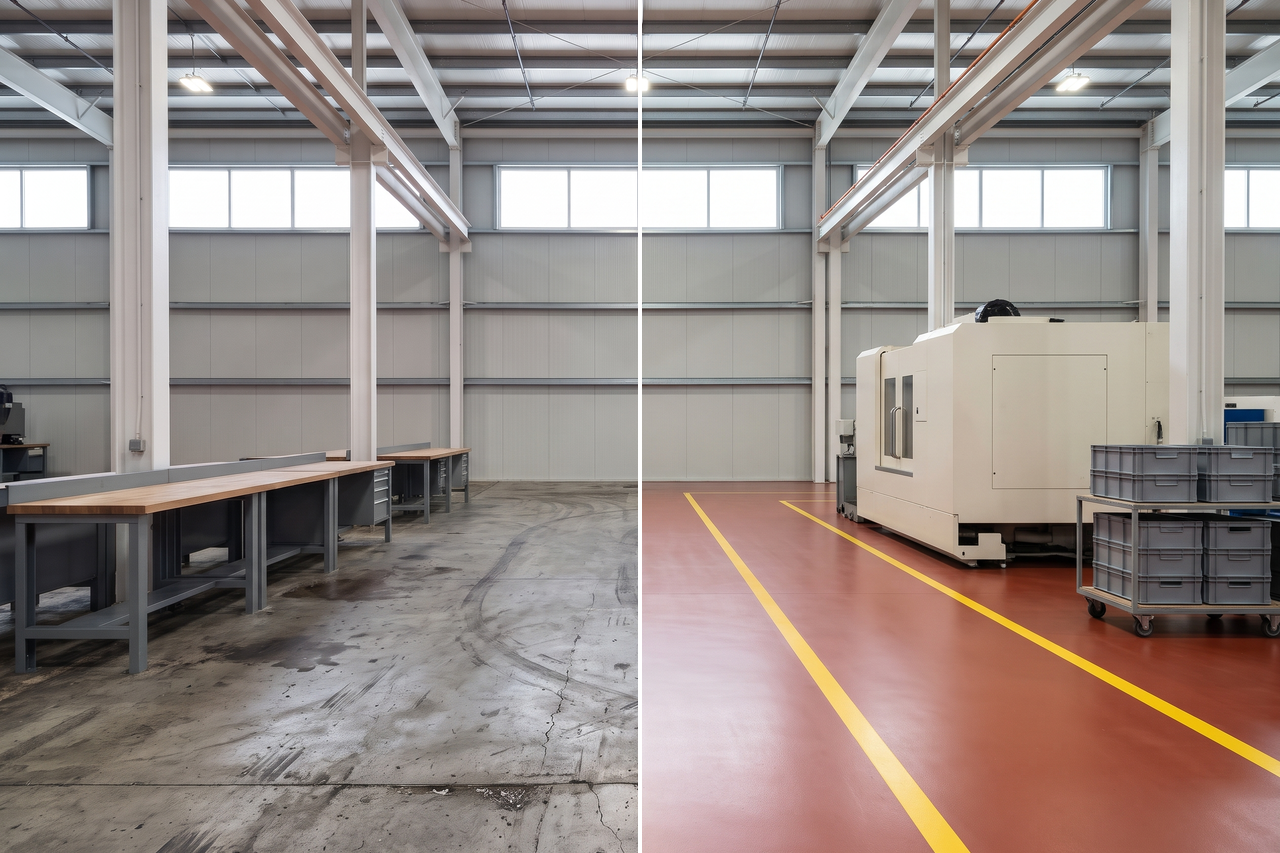
Choose a coating around what the facility actually does, and the upkeep story changes. Tire traffic, hose-downs and the occasional chemical spill now land on a surface built for that duty instead of thirsty raw concrete. A cleaning pass accomplishes more once the floor quits generating its own dirt.
Once sealed, concrete stops shedding most of its powdery grit, a real plus anywhere clean air and healthy equipment matter. Light from the fixtures above also gets bounced back by the coat, so aisles and work areas read brighter with nothing changed in the ceiling.
Hazard zones, lane striping, arrows and gritty slip-resistant finishes can be folded into the spec, as long as the chosen system can carry them and your installer sees a need for them in this building. A floor laid out around real traffic patterns ends up pulling its weight instead of sitting on the repair list.
What Does Industrial Epoxy Flooring Cost?
An industrial floor’s price is assembled from details unique to that job: total area, the slab’s current shape, the grinding and repair it calls for, the film build and resistance ratings of the chosen system, and whether line striping or a gritty anti-slip finish is on the list.
A per-foot rate on its own says very little about industrial concrete. Your installer studies the slab, thinks through what the operation asks of it and weighs the whole scope before attaching a figure to the work.
Common Industrial Flooring Questions
Will epoxy survive daily forklift traffic?
Forklift suitability hinges on two things, the system and your equipment’s habits on the floor: loaded weight, whether wheels are polyurethane or hard nylon, and how many passes each route sees. Some formulations are engineered for steady powered-vehicle use; others are not. The flooring professional sorts this out at the site assessment, before any system is recommended.
Which chemicals can an industrial coating tolerate?
It varies by chemical and by formulation. A coating that shrugs off motor oil may react poorly to a strong degreaser or an acid wash. Giving your installer a specific list of what reaches the floor, be it gear lube, process fluids or a caustic cleaner, lets them judge suitability against real exposure rather than a broad label.
Can the coating itself carry aisle lines and safety zones?
Frequently, yes. Lane striping, hazard zones, arrows and gritty anti-slip texture can live inside the system itself, depending on the products in use and how the facility is laid out. Bring them up early, and they become part of the specification instead of a late add-on.
Will coating the floor interrupt our daily operations?
How much the work disrupts things depends on the project and the contractor. Variables include how much floor is involved, how extensive the prep and repairs are, the system chosen and whether the work can be staged in sections so part of the building keeps running. Your installer talks through these questions before anything is locked in.